Julee Peterson

This portfolio contains client work and is password protected.

Product Designer · Product Manager · Player-Coach

I design products that help people actually change.

For 15 years I've turned research into strategy, strategy into design systems, and lately, designs into shipped code. Most of that time has been spent on one hard problem: building software that helps people form habits that stick.

Currently Staff PM & Designer, Cloverleaf Education MS, User Experience Design Based in Cincinnati, OH (remote-native)
15yrs
in digital product: front-end dev → UX research → product design → product management
5yrs
designing behavior-change coaching software used by Fortune 100 enterprises
1
design system owned end-to-end, measured by component adoption in shipped code
2
roles in one head: I write the strategy doc and design the pixels it describes
Selected work · 2021–2026

Designing for durable habits

Five projects from Cloverleaf, an AI-powered coaching platform, ordered shipped-first. Client names and internal figures are generalized to respect confidentiality. I'm happy to go deeper in conversation.

Systems designB2B / EnterpriseUX writing

From scorecard to coaching surface

An adoption-health framework that turned a wall of judgmental red metrics into next steps admins could act on.

RolePM + design owner ScopeEnterprise admin reporting StatusData export shipped; Adoption Health in research preview

The problem

Enterprise admins at Fortune 100 CPG companies, global tech firms, and healthcare systems all saw the same thing: a binary "low adoption" state on every feature with no benchmark and no narrative. They couldn't defend the numbers to their leadership, couldn't tell which resource to reach for first, and got zero acknowledgment when things were going well.

The reframe

From scorecard to coaching surface: celebrate what's on track, diagnose what's building, route to the next action.

I designed a two-state model, On Track and Building, with transparent expert-set targets for each feature. Features still climbing get two or three curated reasons adoption may be lagging, each linked to a specific playbook, delivered in a calm accordion-and-carousel pattern instead of an alarm.

The craft

The voice principles were as designed as the UI: plain English over jargon, "specific not precise" over fake math, every Building state routed to a next step, Cloverleaf as a credible human voice, not an algorithm. The details mattered too, down to 40px hit areas on 24px paginator controls.

I scoped the MVP deliberately small and documented a five-version trajectory (trend data → severity layers → peer benchmarks → auto-diagnostics → projections), each with explicit "revisit when" criteria, so engineering knew exactly what we weren't building yet, and why.

[ADD IMAGE]
Adoption Health banner, On Track / Building states
[ADD IMAGE]
Curated causes carousel, expanded state

Outcomes & signals

  • Self-service data export, the first question in nearly every enterprise admin conversation, shipped and is live. The Adoption Health surface entered build as a research preview.
  • The strategy doc became the working spec across product, engineering, CS, and content. Four teams, aligned in writing.
  • Built for the user behind the user: outputs admins can hand to their leadership without interpretation.
GrowthConsumerExperimentation

Conversion is a design problem

Years of iteration on Cloverleaf's self-serve signup, trial, and activation funnel.

RoleDesigner, later PM, on the self-serve funnel ScopeSignup → activation → trial → paid StatusShipped and iterated since 2021; trial billing redesign in build

The setup

Alongside its enterprise business, Cloverleaf grows through individuals who find the product themselves. That funnel is a different discipline: a stranger arrives from an ad or a recommendation, and you have a few minutes of attention to get them from a landing page to a moment of real value. My early design work at Cloverleaf lived here, and I never fully left.

The practice

We instrumented the funnel end to end, so every release shipped with a hypothesis and a number to watch. Weekly activation rate was the primary metric, with early-week behaviors like joining a team and connecting a calendar as the supporting cast.

The iteration was unsentimental. One onboarding task got killed when time-on-task data showed nobody actually read it. Later, click data showed users hunting for exactly that kind of help, so it came back redesigned around activation moments instead of feature tours. We also unified what had grown into three divergent onboarding paths into one coherent journey, and moved key integrations into the flow itself after data showed that users who get coaching inside their daily tools stay engaged longer.

Designing the paywall

The trial redesign treats the moment of payment as part of the experience, not an ambush. Card capture sits right after the assessment, when anticipation for results is at its peak. Pricing is listed plainly. A persistent countdown keeps the trial honest, billing is manageable from anywhere in the product, and two days before conversion the user gets a courtesy email saying exactly what will happen and how to stop it.

Conversion you have to trick people into is just churn with extra steps.
[ADD IMAGE]
Signup and trial flow steps
[ADD IMAGE]
Trial countdown and billing transparency states

Outcomes & signals

  • The funnel ran on evidence: tasks lived, died, and came back based on what the data said, not what we hoped.
  • Onboarding personalization (role, goals, assessment results) became the template for how the whole product introduces value.
  • The billing approach borrows from products people trust: transparency as a conversion feature, not a risk to it.
Design systemDesign-to-codeAI tooling

A design system that ships

Owning Cloverleaf's design system and rebuilding the pipeline between design and production code.

RoleDesign system owner ScopeTokens → components → production code StatusLive, in production, evolving

The setup

What I care about in a design system is consistency with flexibility: end users get a cohesive, reliable experience that's accessible to everyone, and the team gets components that bend without breaking. The metrics I track serve that goal (component adoption in code, handoff time, visual regression rate) because a library nobody ships from delivers consistency to no one.

The work

I built and maintain the component library, from tokens to interactive states to light and dark modes, plus the documentation that keeps designers and engineers in sync. When new AI surfaces stressed the system, I extended it rather than letting one-off components multiply.

Closing the gap

This is where my front-end roots came back around. Using Figma's MCP integration with Claude and Cursor, I connected the design system directly into the build workflow: generating mode variations, prototyping new experiences against real components, and pushing accessibility redlines back into Figma. I taught the pipeline at our engineering tech talks.

When a designer can reach the code, the gap between intent and what ships gets small. And engineers get their hard problems back.

A year ago I hadn't opened a terminal in months. This past year my GitHub chart is solidly green. It's not senior engineer code, but it's functional, tested, and shipped, and it turns "let me describe the micro-interaction" into "here's the PR."

[ADD IMAGE]
Component library overview
[ADD IMAGE]
Design-to-code workflow / GitHub contributions

Outcomes & signals

  • 144 production contributions on my GitHub chart this past year, from a designer who hadn't opened a terminal in months.
  • The design-to-code pipeline was adopted beyond me: I taught it at our engineering tech-talk series.
  • Success is measured where it counts: component adoption in code, handoff time, and regression rate, not library completeness.
ResearchProduct strategyOnboarding

Fixing the front door

Rethinking how users choose what to work on, the single decision that shapes every downstream outcome.

RolePM + designer, end-to-end ScopeOnboarding & first-run experience StatusPitched as a top company bet; prototype + interviews in flight

The problem

Cloverleaf's coaching experience begins with users selecting a development focus. Mining six months of meeting notes, user interviews, and product data surfaced an uncomfortable truth: the vast majority of users picked a focus at random, with no context. That included some of our most enthusiastic champions, who created none at all without direction.

That one broken moment contaminated everything downstream: coaching relevance, check-in completion, and the credibility of the ROI story enterprise buyers were asking for.

Fix the entry point, and you fix everything downstream of it.

My role

I owned this end-to-end as PM and designer: synthesized the signal from research and data, made the case to leadership in our planning process, and designed the new flow.

The approach

Flip the model from "pick from a list" to assessment-first and recommendation-led. Users complete a short assessment before choosing; the product then recommends focuses grounded in their actual personality data. First contact becomes an "I see you" moment instead of a blank menu.

I prototyped the new flow against the current one, paired it with qualitative interviews, and defined the falsifier up front: if assessment-first increased trial drop-off through cognitive load, we'd revisit. Designing the test that could prove me wrong is part of the design.

[ADD IMAGE]
Before/after of focus selection flow
[ADD IMAGE]
Assessment-first prototype screens

Outcomes & signals

  • Six months of interviews, account calls, and product data, synthesized into a written case that put this on the company's short list of bets. Results are pending, and I defined up front what failure would look like.
  • Reframed a "feature request" backlog conversation into a systems conversation about the entry point.
  • The recommendation approach builds on assessment data competitors simply don't have.
VisionAI / 0→1Strategy

One coach, not four features

Vision work to collapse a fragmented AI experience into a single, personality-aware coaching surface.

RoleDesign lead + product voice ScopePlatform-level vision StatusTechnical foundation shipped; unified surface in design

The problem

The platform's AI capabilities had grown up as silos: discovery chat, feedback tools, practice scenarios, each its own destination. Users experienced features. The brand promised a coach. The longer the gap persisted, the more it defined our category position.

The vision

A unified coaching surface where one AI coach draws on every tool, plus a personalization layer that puts existing personality data to work in every interaction. Every user already had rich assessment data we weren't using in coaching conversations, and that data is the hardest thing for a competitor to copy.

Make every surface feel like "I see you." That's the moat, not the model.

The strategic call

The engineering foundation shipped before the design strategy was settled, which forced a real product decision: ship multi-tool calling inside the current chat UI as an MVP, or hold for the unified design. I argued for both: ship now in the existing UI to start learning, and design the unified surface in parallel. I also named what would change my mind, which was research showing the unified surface hurt discoverability of the features it absorbed.

My role

Design lead and product voice for the vision: sequencing which surfaces get personality data first, defining the MVP path, and pressure-testing the discoverability risk.

[ADD IMAGE]
Unified coach surface concept
[ADD IMAGE]
Personalization layer sequencing map

Outcomes & signals

  • The context engine powering the vision has shipped to production. My recommended path, shipping multi-tool calling in the current UI while the unified surface is designed, keeps learning ahead of the redesign.
  • This is vision tied to a shipping strategy, not a concept deck that dies in Figma. I'm showing it anyway because Staff-level work includes the bets still in motion.
  • Position-defining: moves the product from "features" to "coach" in the user's mental model.
Earlier work · Agency years

The foundations

Five years at Openfield leading UX for education-technology clients, and four years in brand and digital art direction before that.

Wiley · WileyPLUS

Student experience redesign

Led research and redesign of the assignment experience: diary-style homework probes, co-creation workshops, and two rounds of moderated testing across 12 students from 10 institutions. The core insight was that students need time to mentally prepare before starting, and it reshaped the entire landing experience.

"I really liked how the system was updated, it looks much cleaner and more professional."Student, usability testing round 2
iClicker

Desktop app redesign

Led UX across the instructor and admin product line, including a full redesign of the flagship desktop app around the classroom mental model, and built the design library that made design and development faster. That library was the seed of my design-systems practice.

Openfield · Practice lead

Accessibility leadership

As Accessibility Lead, I built the practice into how the studio worked, then took it public with a published article series on inclusive design and accessibility regulations. The argument: UX means all users, and inclusive design should be second nature, not a checkbox.

How I work

What you get in one head

Research is the engine, not a phase

MS in UX Design and a decade of practice: probes, co-creation, moderated testing, and the quieter craft of mining what users already told you in support tickets, sales calls, and data.

I read data honestly

Not just finding the number that confirms the hypothesis. I define what would change my mind before I ship, and I write it down so the team can hold me to it.

Writing is a design tool

Strategy docs, voice principles, falsifiable bets. The fastest way to align product, engineering, CS, and content is a document clear enough that the meeting becomes optional.

Player-coach by nature

I've built and managed teams across design, product management, product marketing, content, and program management, including making the case for a senior designer's promotion, all while keeping my own hands in the work. Team of one today, team builder when it's time.

Ship to learn

From paper prototype to production PR, I bias toward the smallest thing that generates a real signal, then document the longer trajectory so small never means short-sighted.

Accessible, always

Hit areas, contrast, focus states, and plain language are in the definition of done. That's a habit from years of accessibility leadership, not an audit at the end.

What teammates say

Pulled from the brag box

Unprompted notes saved over the years, from the engineers I ship with to the founders I report to. Shared with their permission.

"What you have accomplished has literally entirely redefined my conception of how much someone in your role can accomplish."

Product & engineering leader, Cloverleaf

"You're such a badass and get SO much important stuff done just on your own initiative. So glad I get to work alongside and learn from you."

Engineer, Cloverleaf

"A responsive rockstar when it comes to project questions, direction, and design."

Engineer, Cloverleaf

"Thank you for bringing more structure and clarity to how we do product. You have accomplished so, so much, from product monthly updates to PM levels to RFCs."

Co-founder, Cloverleaf

"Your ability to actively listen, thoughtfully respond, and drive ideas into solutions is such an asset to Cloverleaf."

Executive, Cloverleaf

"A relentlessly fierce advocate for all forms of accessibility, and working to educate our teams so we can join you in creating a better experience for ALL users."

Product designer, Cloverleaf
My story

Every chapter added a layer

I didn't plan a hybrid career. I just kept following the user across the org chart.

2010–2012 · Dynamic Data

Web design & front-end development

Where creativity met functionality, and where I learned how things actually get built. That mental model quietly paid dividends for the next decade.

2012–2016 · Geometry Global

Digital art direction

Brand and campaign work for John Deere, Nestlé, Kimberly-Clark, Philips, and Sherwin-Williams. Learned the power of data and communication, won a couple of Addy awards, and earned my MS in User Experience Design at night along the way.

2016–2021 · Openfield

UX design & accessibility leadership

Five years deep in research and design for ed-tech, finishing as Accessibility Lead / Senior UX Designer, and began managing.

2021–present · Cloverleaf

From senior designer to product leadership

Five roles in five years: Senior Product Designer → Group Manager of Product and Design → Group Manager, then Senior Group Manager, of Customer Insights & Design Thinking → Staff Product Manager & Designer. Today I own product strategy and design for core coaching experiences and ship code alongside the engineers.

Next

Where this is headed

I'm looking for a team where behavior change is the product, and where one person who can research, design, write, and ship is more useful than three who each do one of those.

Beyond the work

A little about me

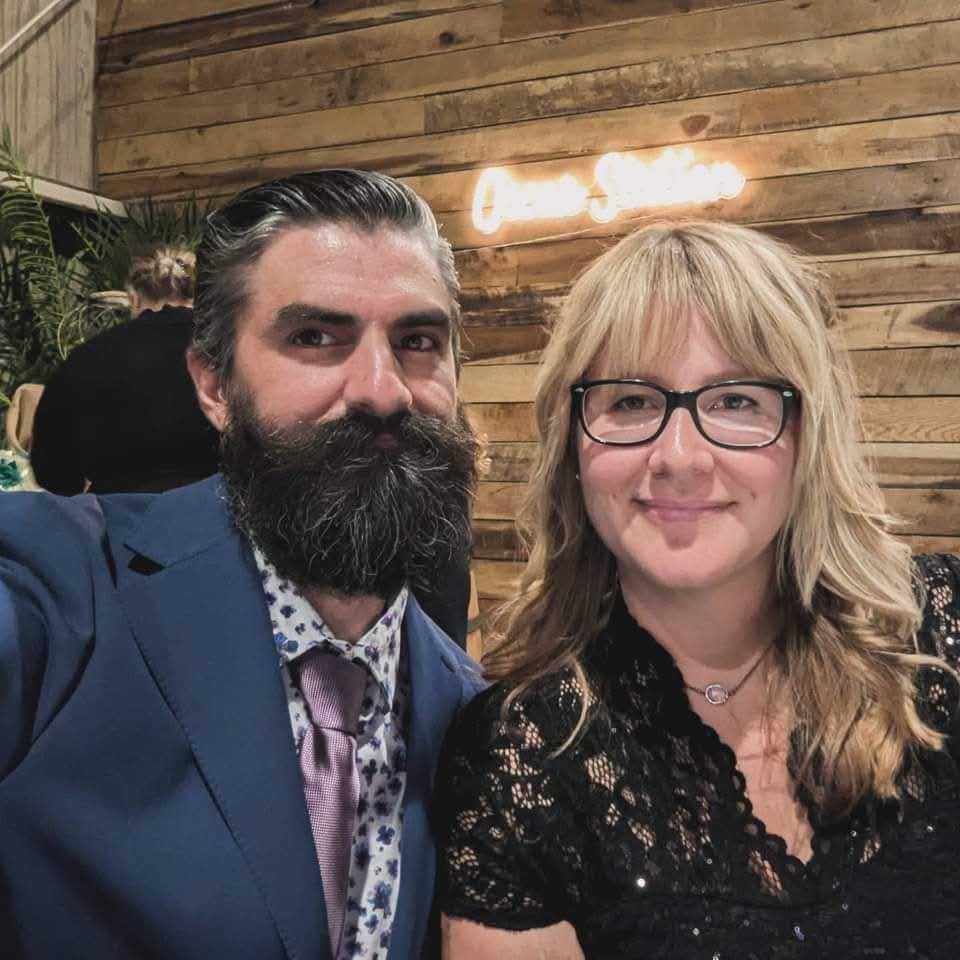
Julee and her fiancé at an event, smiling in front of a wood-paneled wall

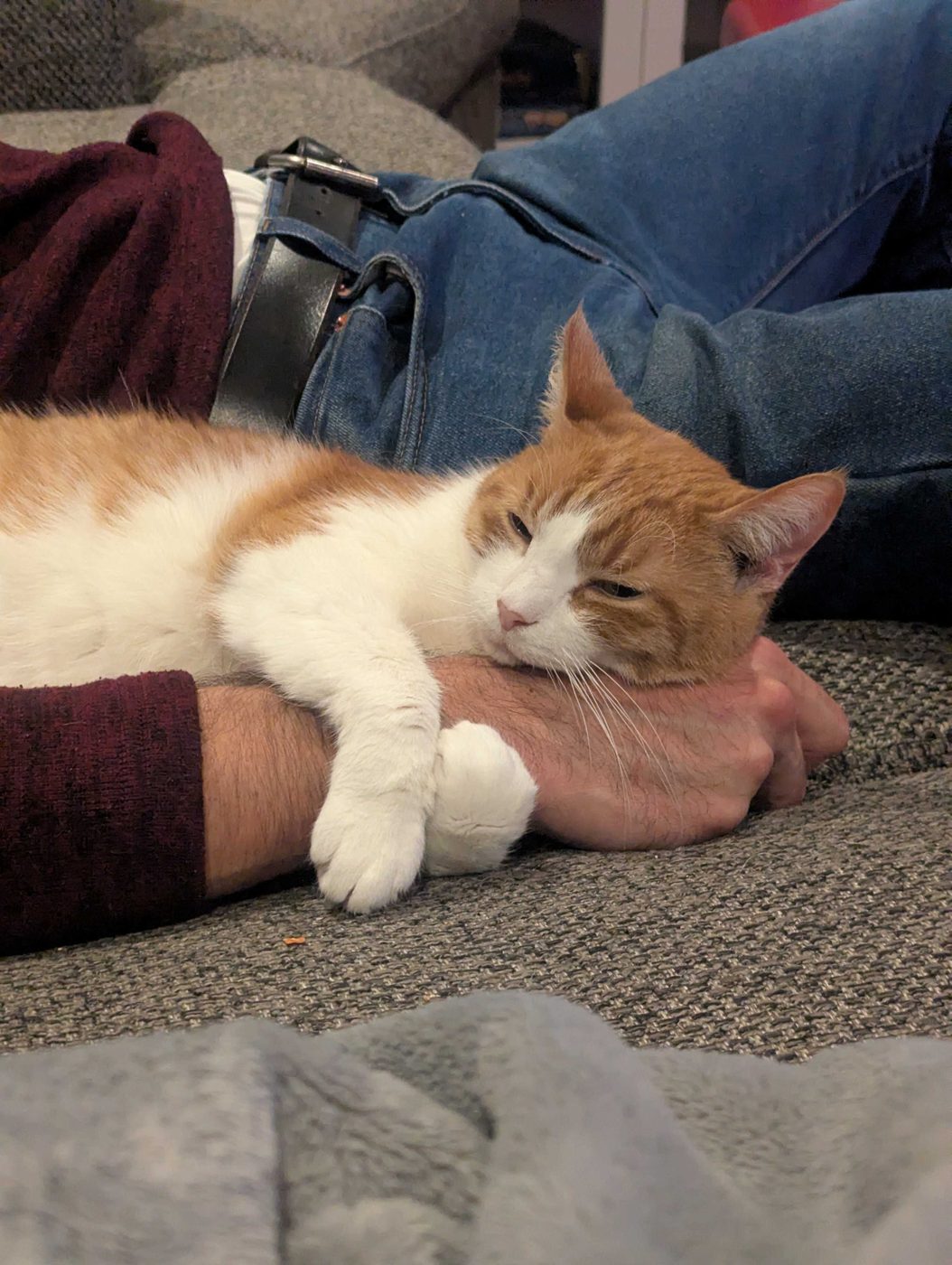
My fiancé and me. Mac's portrait is below; he insisted.

The maker streak runs deep. I started my career building websites by hand, and after fifteen years of wireframes, research reports, and strategy docs, I've circled back to where I began: making things. These days that means a design file in one window and Claude or Cursor in the other, turning ideas into working software before the meeting about the meeting can get scheduled. This site is one of those projects. So is the small graveyard of experiments living at jumpingpixel.net, a domain I keep because every tinkerer needs a junk drawer.

What actually gets me out of bed is solving people's problems. I'd love to claim that's a noble choice, but I work at a company that measures personality for a living, and my assessment results are unanimous: I'm just wired this way. So I lean into it. If something I made makes someone's day easier, better, or a little more enjoyable, that's the job. Everything else is craft in service of it.

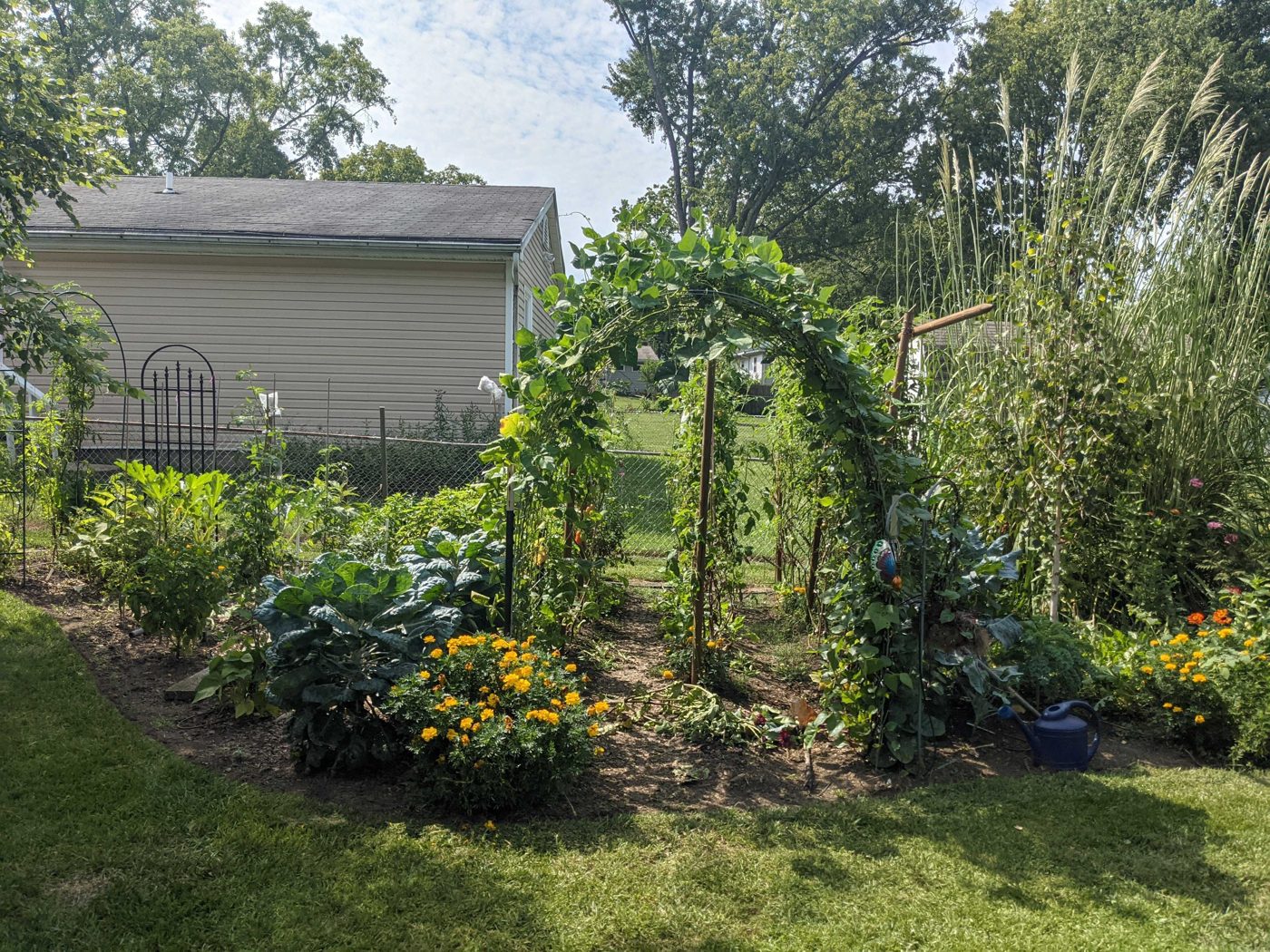
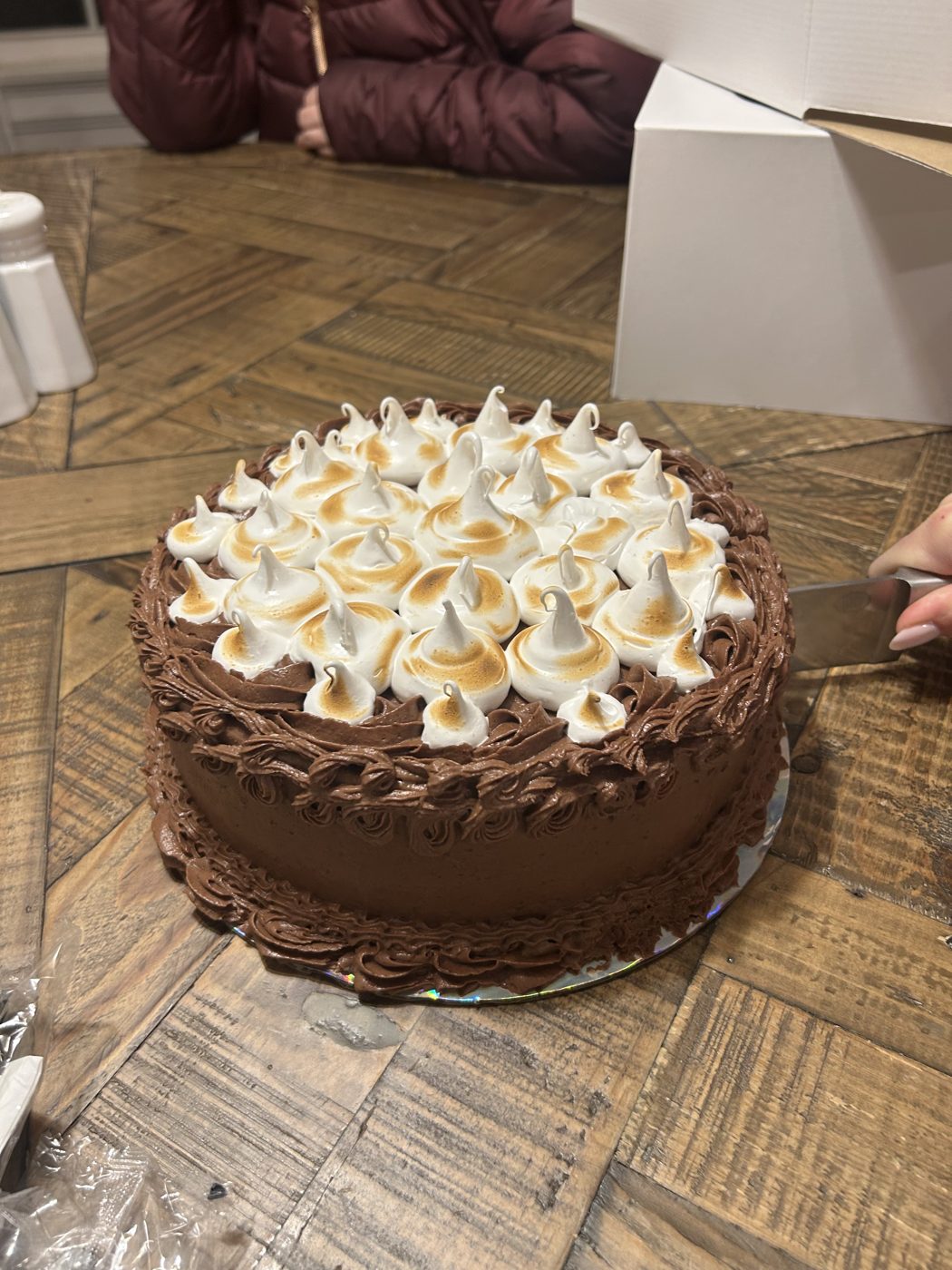
Off the clock, I get my hands dirty on purpose. I'm a gardener, a few years into building up my beds, and it's the best antidote I've found to a day of staring at screens. I bake, and I'll claim this one outright: I have mastered the macaron, the most temperamental cookie in the business. Summers are for the bike, where I set new mileage goals and go find trails I haven't ridden yet. And somewhere down the road there's a dream that ties it all together: a small farm with a farm-to-table restaurant, where the growing, the making, and the feeding happen in one place.

I live in Cincinnati, Ohio with my fiancé and our cat, Mac, who supervises my home office with the confidence of someone who has never shipped anything. Fifteen years in product taught me which work I like best: the kind where you watch a real person have an easier day because of something you built. That's why behavior change keeps pulling me back in. Software rarely changes a life in one dramatic moment. It does it the way people do, a little bit every day, on purpose.